
I was driving to Torquay one day and spotted a juvenile black-shouldered kite in a dead tree.
I had to make a tricky u-turn to take some photos and when I went back, I noticed the bird was accompanied by an adult, so it must have still been a fledgling and needing the adult to supply food and protection. Young black-shouldered kites have rusty brown plumage around the neck, head and breast, whereas the adult birds have a pure white head, body and tail and black shoulders.
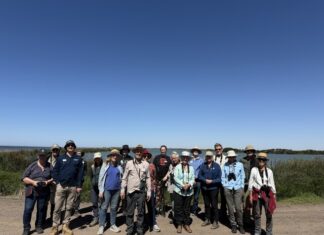
I had a lovely walk around Robin and Gary Spry’s property at Lake Victoria near Point Lonsdale. This time of year there are migratory waders that frequent the lake, but we didn’t see any on the north side.
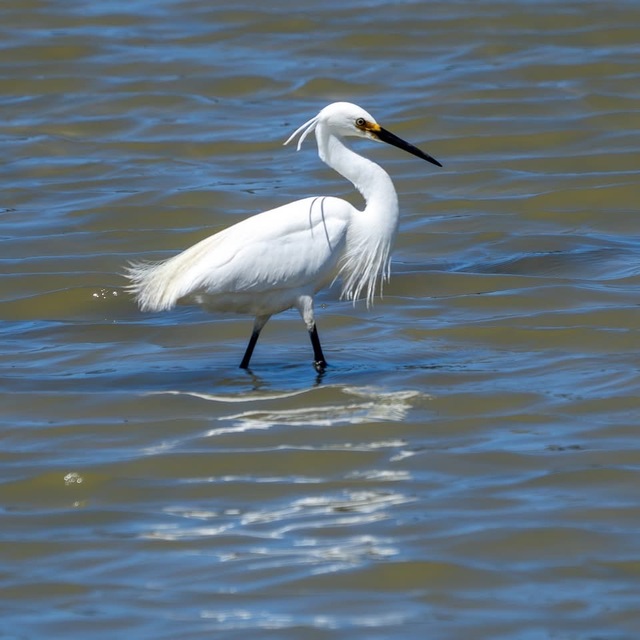
We did see 28 species of birds including a pair of striated fieldwrens, a pied stilt and a pair of pink-eared ducks. Robin sent me some lovely photos that she took of a flock of banded stilts that were recently frequenting the lake, plus a little egret.
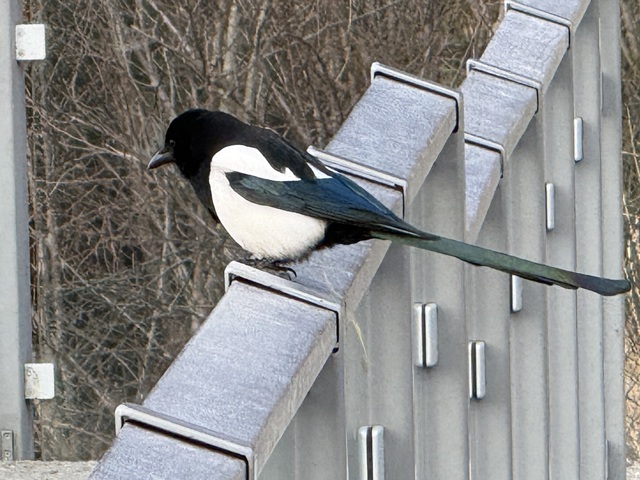
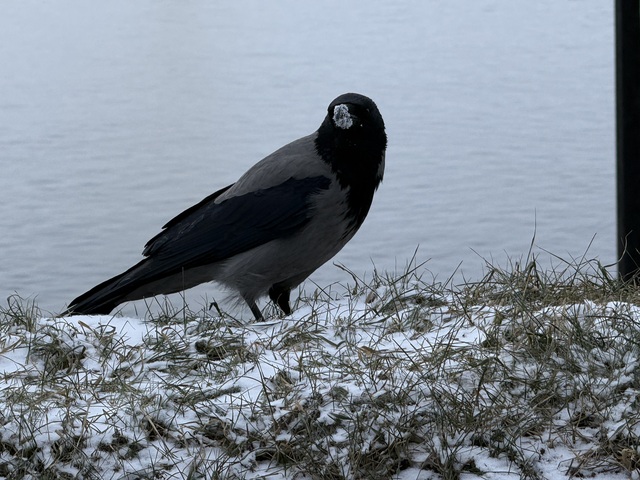
Ocean Grove Voice news editor Justin has been travelling around Norway where he saw a Eurasian magpie above the Arctic Circle at Tromso and a hooded crow in Oslo.
Pete Sullivan and Barry Lingham placed some water troughs at Ocean Grove Nature Reserve because the ponds on the west track and north track have dried out.
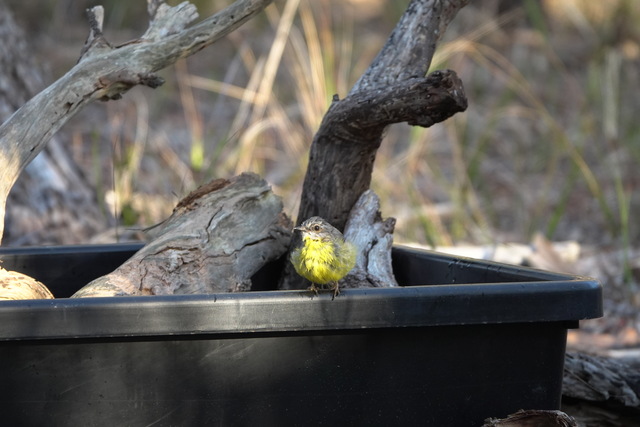
The troughs are already attracting birds as can be seen by Pete’s photo of an eastern yellow robin sitting on the trough after having a bath.
I received an email from Kevin, who reported that there were lots of birds at Lake Lorne.
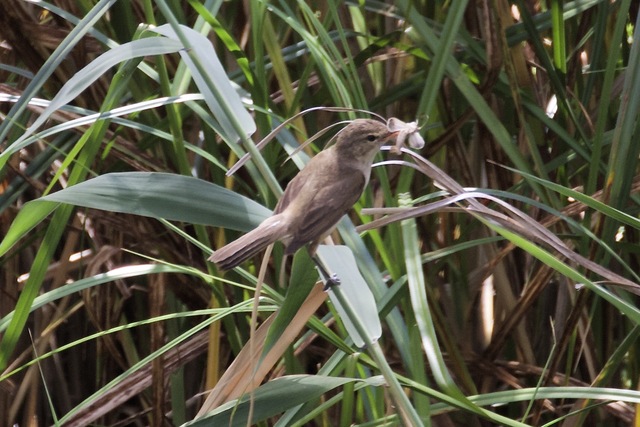
Eurasian Coots were congregated in scores with numerous other birds, including pink-eared ducks, which were in good numbers, one red-rumped parrot and one pied stilt. Kevin also sent a photo of a lovely reed warbler that he spotted in Inverleigh.
I received an email from Carole, who has at long last recovered from a Costa Rica jaunt (half her luck) leaving her with pleasant memories of the most wonderful birds.
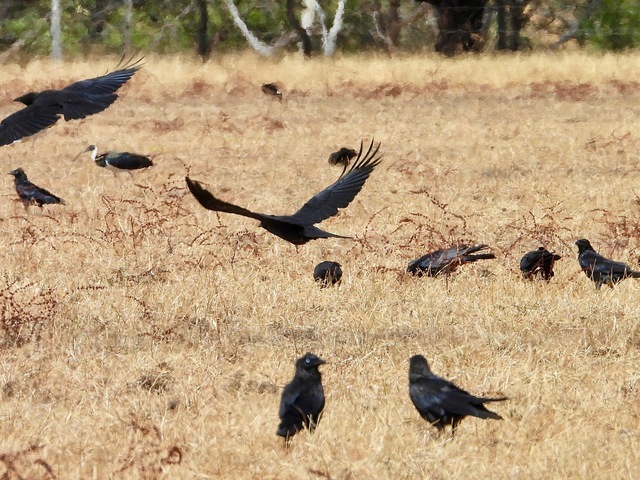
Recently Carole has noticed an influx of ravens in the paddocks around the Bellarine. Sometimes there are around 20 or more in a paddock. Carole wondered if the little ravens spent all year around the Bellarine or if they moved around between habitats.
Little ravens can be seen in grasslands, pastures and in woodlands. According to Birdlife Australia, when breeding, little ravens remain in one place for about three months and in the non-breeding seasons they are known to travel widely and form flocks.