

After Christmas I had a quick trip to my happy place – Bermagui in NSW.
I usually don’t go to the NSW coast in the New Year period and it was so busy up there with traffic jams around the beach areas.
The forests around that coast are also very dry, so hopefully they won’t suffer the same fate as Victoria’s bushland.
When in Bermagui I start every morning by driving to Wallaga Lake where I usually see unusual and exciting birds such as far eastern curlews, reef egrets, or bar-tailed godwits. This summer I saw one bar-tailed godwit, but no egrets or curlews.
I checked Ebird when I arrived home and seven far eastern curlews were spotted at Wallaga Lake on January 7, so I just missed them.
After looking around Wallaga I usually drive to Tilba Tilba where the Gulaga Mount Dromedary Walking Track starts. I walked the first 500 metres of the track every morning, and that was enough distance to see some great sights.
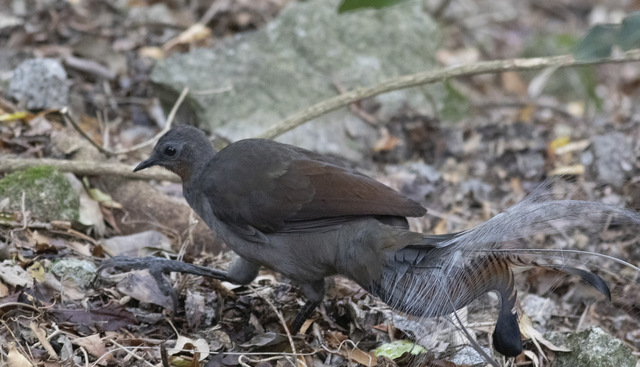
One morning I noticed some movement on the side of the walking track and my initial reaction was that it was a wallaby as I saw a ‘tail’ sticking up right next to the shrubs. When I looked again, I realised that the tail I saw was a feather and what I was witnessing was one of the best birds of them all, a superb lyrebird walking through the shrubs on the edge of the track.
Unfortunately it spotted me and started flying and moving quickly over the track, so my photos were very ordinary. On the other side of the track was a steep slope covered by a thick canopy of trees and I managed a few photos of the bird, but they were grainy due to the darkness of the environment.
When I went back to the walking track in subsequent days, I could hear lyrebirds but didn’t manage any further photos. Lyrebirds are expert mimics and I heard one imitate an eastern whipbird one morning, which was interesting.
I noticed how big the feet of the lyrebird were, and the toes are long because these birds feed on insects, spiders, worms and seeds that they locate by scratching with the large feet through the leaf-litter on the ground.
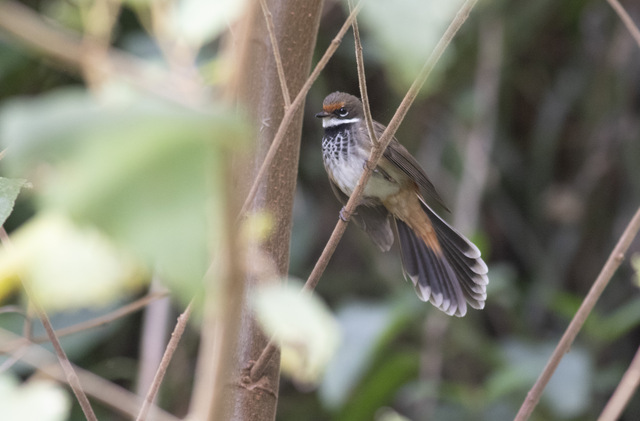
Besides having a close encounter with a lyrebird, I saw a beautiful azure kingfisher at Wallaga, and some rufous fantails and a few black-faced monarchs in the bush.
Monarchs are flycatchers that are found along the east coast of Australia from Far North Queensland to Gippsland. They inhabit rainforests and forests and they make seasonal movements in the breeding season from northern regions of Australia to south-eastern forests where they breed.
Rufous fantails also have seasonal movements in that they move northwards in winter and virtually disappear from Victoria and New South Wales at this time, before returning to the forests to breed.
Rufous fantails are stunning little birds, but they are usually found under the tree canopy and they move so quickly through the habitat that they are very difficult to photograph.