

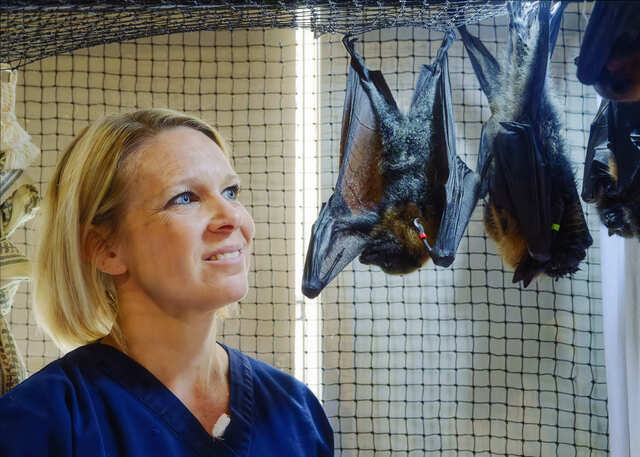
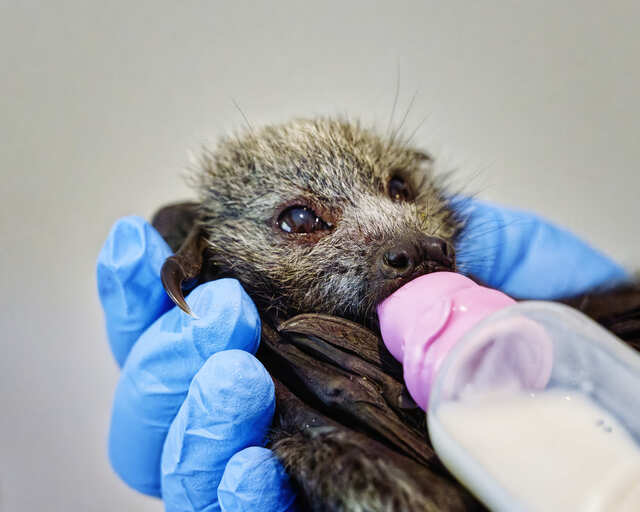
Geelong is facing an increase in the number of grey-headed flying-fox pups being abandoned and requiring care following bad weather.
Grey-headed flying foxes are an endangered species and rely on their mother for food and protection, but due to last month’s wet conditions, more pups are coming to wildlife carers malnourished and underweight.
Bats of Geelong coordinator and primary carer Layla Merritt said she started to see an increase in abandoned flying-fox pups at the Geelong colony during the second week of November.
“Due to the increased rainfall, mothers have become malnourished because their main food source, which is nectar, is being washed off from the blossom; therefore, their food source isn’t available,” she said.
“They are unable to sustain their pups…so mums are making that decision, as they can’t carry their pups for a long distance, to abandon their pups in the colony to search for food.
“They could be left in the canopy of a tree for a week or two before they would end up starving to death if they’re not preyed upon or pass away from hypothermia first.”
Ms Merritt said she was concerned that more flying-fox pups could die or be abandoned if the region continued to experience wet weather.
“If our weather does continue to be quite wet over spring, we will likely find they will change their patterns and may not come here at all to set up their nurseries,” she said.
“It will be quite detrimental to our ecosystems if that does happen, but they’re going to learn at some point that Victoria might not be a good place to have their baby if there’s not going to be food.”
City of Greater Geelong acting executive director of city infrastructure Amanda Locke said council was doing what it could to look after the region’s flying foxes and encouraged the community to do the same.
“Flying foxes are nomadic and play an important role in pollination and seed dispersal, so we’re committed to keeping Eastern Park a safe place for them,” she said.
“We’ve set up an exclusion zone around the camp, paused non-essential work, added signs to remind people to keep their distance, and are doing regular checks in line with DEECA’s advice.
“The community can help by checking backyard fruit-tree netting to make sure it’s safe for wildlife. If you can poke your finger through the mesh, it’s likely illegal and can harm wildlife.
“Planting native tree species like eucalyptus, paperbarks, grevilleas and banksias also helps provide food sources and supports the health of our local biodiversity.”
If anyone finds a flying fox pup or adult alone, they should never touch it and instead should call a wildlife organisation such as DEECA.