

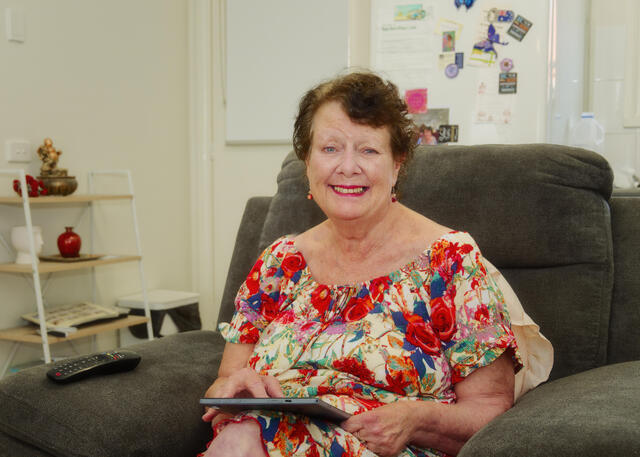
When mother of four Lynda separated from her partner 10 years ago she had no idea of the challenges that lay ahead.
At the time Lynda, then 54, was working full-time in disability services and receiving the disability support pension due to lifelong cerebral palsy.
“I could work, disability was paying good money, so I could support myself,” she said.
“I was quite okay for a while, but then the pain (from cerebral palsy) just got too much and I couldn’t work anymore.
“When I stopped working I was paying $250 a week in rent, but not long after they put the rent up to $270. I knew that would be an ongoing issue; rent goes up.
“Then I sold the property I had owned with my ex-partner and I had some money. But when you stop work, you don’t get anymore money; I needed to secure my future.”
In 2024, Lynda made a decision to protect her future, her independence and her mental health; she entered retirement living at 62 years of age, buying a unit at Mercy Place Rice Village in Marshall.
Lynda said it had been a difficult decision to make, but one that was made easier due to the fact her 90-year-old mother was living there.
“Because I’ve got cerebral palsy, I needed somewhere that was flat and accessible, and the unit had to be safe,” she said.
“When one of the units here became available I thought I’d just better take it. There aren’t a lot of places in Geelong with affordable one-bedroom units.
“Moving to Mercy Place Rice Village was the first time I felt safe and settled after years of instability.”
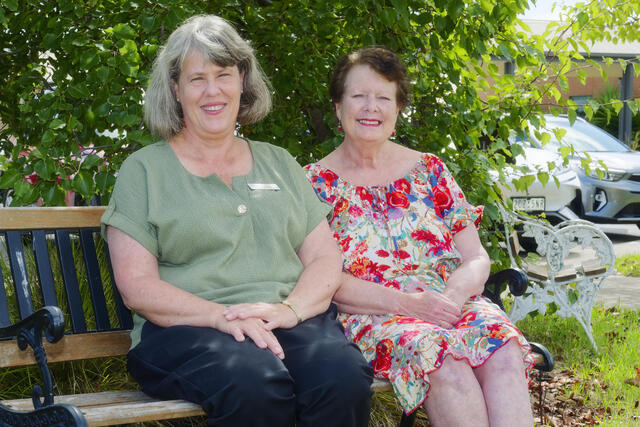
Retirement village manager Sally Doodt said stories like Lynda’s were becoming more and more common among women in their 50s and early 60s.
“Most of the recent move-ins that I’ve done have been single women,” she said.
“They might have been separated, or in a rental situation where they don’t think that they will ever be able to afford to buy a house again or work off a mortgage.
“Because of the rental crisis, people are now turning to retirement villages at a younger age than we’ve seen previously. Now there are many more people aged between 55 and 65; before that people moving in were usually between 75 and 85.”
Lynda said she thought more people should consider moving into aged care “earlier than later”.
“It gets a lot harder as you get older…so the earlier you get in, the better,” she said.
“I feel so much more at peace knowing my kids won’t have to worry about where I’ll end up. I’m not a burden and I’ve built a community here.
“I’m talking to more people now than I ever did when I was working. It keeps my mental health good, and we laugh every day.”